
Buying a used pram: the checks that matter
Prams are one of the best second-hand buys going. A few checks make sure you get a safe one.
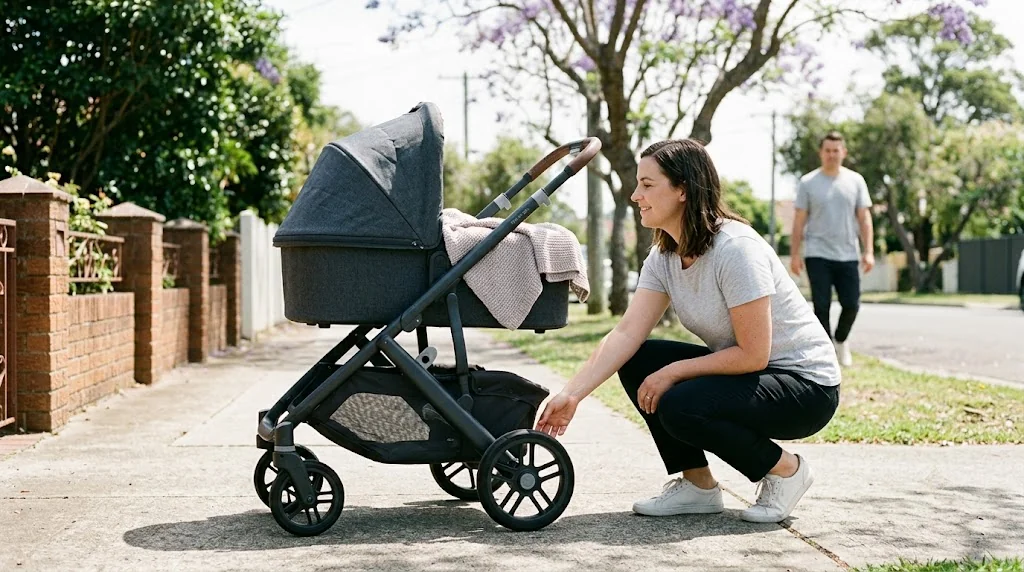
Why prams are a smart second-hand buy
A good pram costs a lot new and holds its value well, which means a second-hand one is both a real saving and, if you buy carefully, easy to resell later. The key is knowing what to look at.
The checklist
- Recalls first. Check the model against the ACCC recalls database before anything else. Prams do get recalled for pinch and entrapment risks.
- Brakes. They should engage firmly and hold the pram still on a slope. Spongy or failing brakes are a dealbreaker.
- Harness. All straps, clips and buckles present and working, with no fraying. A five-point harness should click in securely.
- Frame and folding. Fold and unfold it fully. The locking mechanism must catch properly so it can't collapse in use. Check for cracks, rust or bent metal.
- Wheels. They should roll straight and true, spin freely, and not wobble.
- Fabric and hygiene. Removable, washable covers are a bonus. Check for tears, stains and mould.
Test it in person where you can
If you're buying locally, push it, fold it and check the brakes before you pay. If it's posted, ask the seller for clear photos of the frame, harness and wheels, and the model number so you can run the recall check.
Keep the manual if it has one
An included manual, or a model you can look up online, makes it easier to check weight limits, fit accessories, and resell the pram later.
References
The wear checks are standard practice for used prams; the recall and second-hand-buying steps follow ACCC Product Safety.
Related reading
Find a pram worth keeping
Quality prams, passed on by families who looked after them. See what's available near you.
Shop the marketplace