
Is that used cot safe? What AS/NZS 2172 actually means
A second-hand cot can be a great buy, if it meets the standard and passes a few specific checks. Here they are.
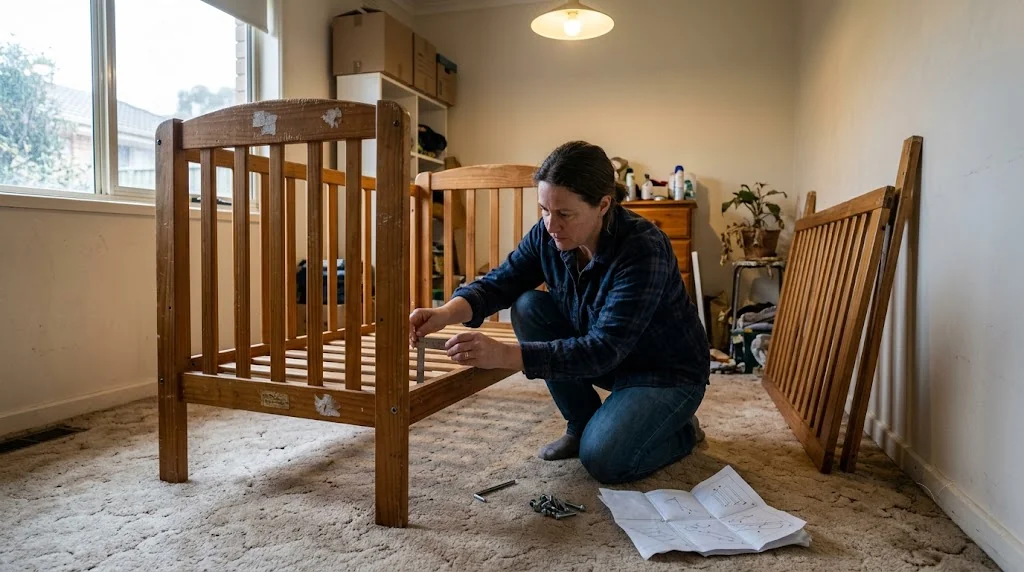
The standard, in plain English
Cots sold in Australia have had to meet a mandatory safety standard, AS/NZS 2172, since 1998. A cot made for the Australian market from then on should carry a label showing it complies. If a second-hand cot predates the standard, or you can't confirm it meets it, that's a reason to be cautious.
The specific hazards to check
- Bar gaps. Gaps that are too wide can trap a head or limb. The standard sets safe spacing, so a compliant cot has this covered.
- Protruding knobs and corner posts. Anything a child's clothing could catch on is a strangulation risk. Corners should be flush.
- Lead paint. Older or overseas cots may have paint that isn't safe. Chipped or flaking paint on an old cot is a red flag.
- Structural wear. Loose joints, cracked timber, a wobbly frame or missing hardware all make a cot unsafe.
- Drop-sides. Old drop-side cots have been linked to serious injuries and are best avoided entirely.
A word on portable cots
CHOICE testinghas found that more than half of the portable cots they assessed failed to meet safety standards. If you're buying a portable cot second-hand, check the model, make sure the mattress is firm and correctly sized, and never add extra padding.
The quick verdict
A post-1998 cot that carries its compliance label, has safe bar spacing, no protruding hazards, sound structure and its own firm, well-fitting mattress is a safe second-hand buy. Anything you can't verify, leave.
References
AS/NZS 2172 has applied to cots sold in Australia since 1998; the ACCC's mandatory standard was updated again from January 2026.
Related reading
Shop the nursery, safely
Once you know what to check, a second-hand cot is a great saving. See what other families are passing on.
Shop the marketplace