
The real environmental cost of fast kids' fashion
Cheap, cute and everywhere. The trouble with fast fashion for children is how quickly it's made and thrown away.
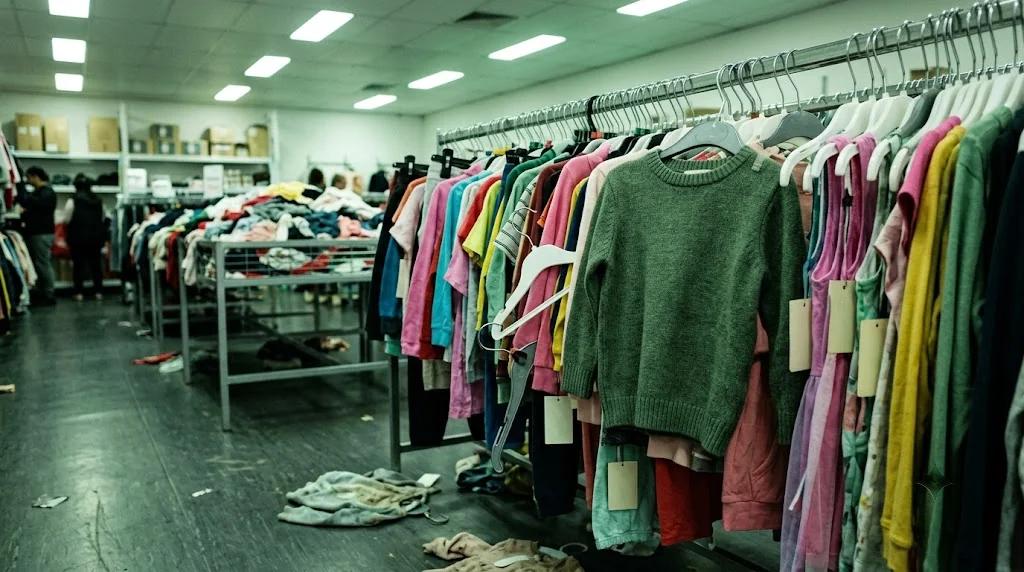
The scale of what's made
The Australia Institute (2024) estimated more than 1.4 billion new garments come onto the Australian market each year. A large share is fast fashion: made cheaply, priced to be almost disposable, and often worn only a handful of times.
Children's clothing sits right in the fast lane. Little bodies grow constantly, so parents buy often, and the low prices make it easy to buy more than you need.
The hidden costs
Every new garment carries a footprint before you ever wear it: water to grow and process fibres, energy to manufacture and ship, and synthetic materials that shed microplastics. Then, at the end, more than 200,000 tonnes of clothing goes to Australian landfill each year, with another 105,000 tonnes exported, often to become someone else's waste.
The single most effective response
You don't have to dress your kids in hair shirts. The most effective thing a parent can do is simple: buy fewer new garments and more pre-loved ones. Extending the life of clothes that already exist avoids the footprint of making new ones entirely.
Better made, bought once, worn many times
Buying a well-made piece second-hand, then passing it on, beats buying three cheap ones that fall apart. It's cheaper for you and lighter on the planet. When your kids outgrow a piece, you can sell your baby gear on to the next family.
References
The footprint of new clothing production is well documented across environmental research.
- The Australia Institute, Textiles Waste in Australia (2024) (garment volume and waste figures).
- QUT Crime and Justice Research Centre, Reducing textile landfill (2025)
Related reading
Dress them well, waste less
Choose quality pre-loved pieces over disposable new ones. See what other families are passing on.
Shop the marketplace