
What happens to the school uniforms we bin each year
Uniforms are worn hard, outgrown on schedule, and thrown out in bulk. Most of them didn't need to be.
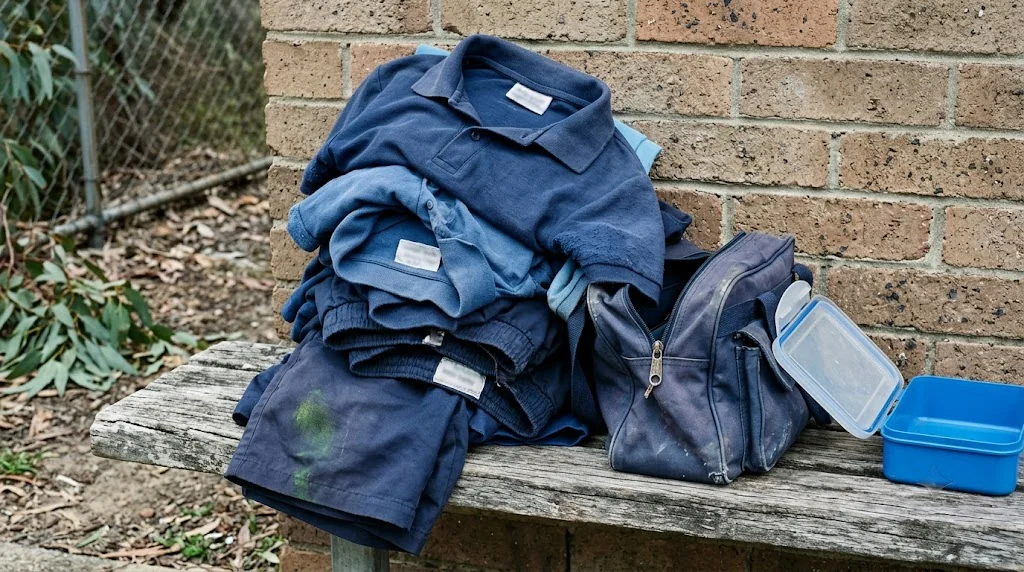
A quiet mountain of waste
School uniforms are a textile-waste story hiding in plain sight. Research has estimated that more than 2,000 tonnes of school uniforms are discarded in Australia each year (MDPI, 2025). It's worth noting that figure originates from a commercial uniform recycler, Worn Up, so treat it as an industry estimate rather than an official statistic, but the direction is clear.
Uniforms are almost designed to churn. Kids grow, sizes change every year or two, and logos and styles are specific to each school, which makes them awkward to donate broadly.
Why so much ends up binned
A uniform outgrown by one child is often perfect for another at the same school, but the two families never meet. So the jumper that cost a fair bit new gets shoved in a bag and, too often, thrown out rather than passed along.
The better path
Second-hand uniform pools, school buy-and-sell groups, and marketplaces all solve the same problem: connecting a family whose child has outgrown a size with one whose child is about to grow into it. Uniforms are hard-wearing, so a pre-loved one usually has plenty of terms left in it.
Buy pre-loved, sell it on
Buying uniforms second-hand and passing them on when they're outgrown keeps them cycling through the families who need them, and out of the bin. It's cheaper every January, too. When a size is done, sell your baby gear on to the family growing into it.
References
The 2,000-tonne figure is an industry estimate (from uniform recycler Worn Up, cited in the paper below) rather than an official government statistic, and we've flagged it as such.
- Sustainability (MDPI), school-uniform textile waste study (2025) (draws the 2,000-tonne figure from recycler Worn Up).
Related reading
Keep uniforms in the schoolyard, not the bin
Pass on outgrown uniforms and pick up the next size from another family.
Shop the marketplace