
From buyer to seller: how pre-loved gear pays for the next size up
Baby things are used for a handful of months. Treat them as something that passes through your house, and the maths changes.
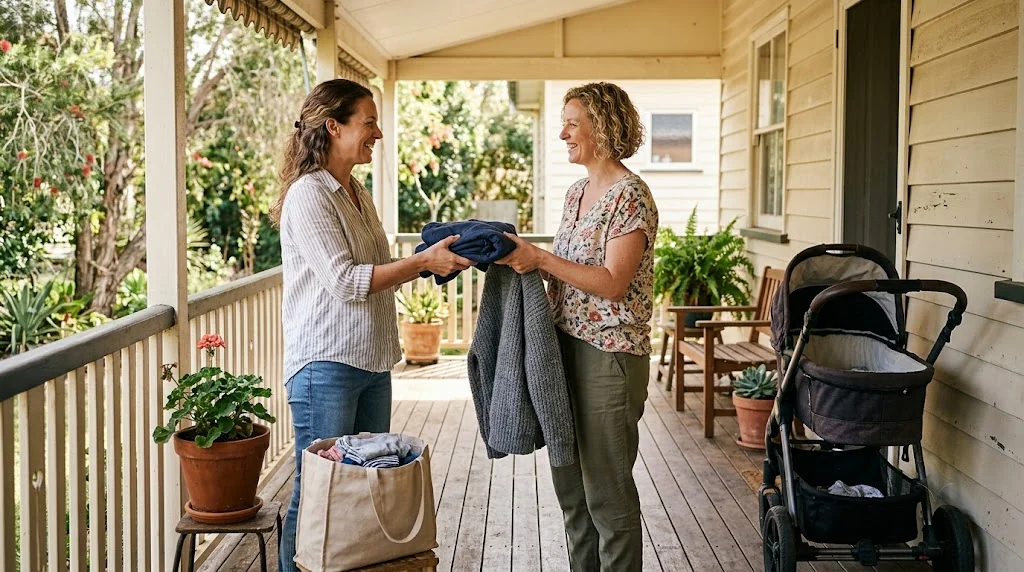
Baby gear has an unusually short life
A newborn moves through several clothing sizes in the first year. A carrier, a bassinet, a bouncer, each has a window of a few months before it's outgrown. Analysts who track resale note that this short ownership duration in baby and maternity categories is exactly what makes today's buyers into tomorrow's sellers (Glimpse).
In plain terms: because your baby finishes with things so quickly, and while they're still in good condition, there's almost always someone a few months behind you who wants them.
The rolling-budget idea
Buy an item pre-loved for a fraction of retail. Use it for its few months. Sell it on for close to what you paid, because it's barely more worn than when you got it. The difference between what you paid and what you recover is the real cost of using it, and it's small.
Each sale funds the next buy
Sell the 000 clothes as your baby grows into 00, and that money goes straight towards the 0. The next size up almost pays for itself. That's the loop.
How to make it easy on yourself
- Store outgrown items well as you go, so they're sale-ready when you're done.
- Sell in small bundles by size. It's less effort and buyers love a lot.
- Keep the good brands separate; they hold value and sell fastest.
- List as you outgrow, rather than letting a year's worth pile up in the garage. When you're ready, sell your baby gear and put it towards the next size up.
References
The buyer-becomes-seller pattern is a directional observation rather than a precise statistic, but it matches what any parent who's cleared a nursery knows.
Related reading
Start the loop
Sell what your baby has outgrown, and put it towards the next size up.
Start selling on Lhoop